


Sea cucumber drying
Release time:

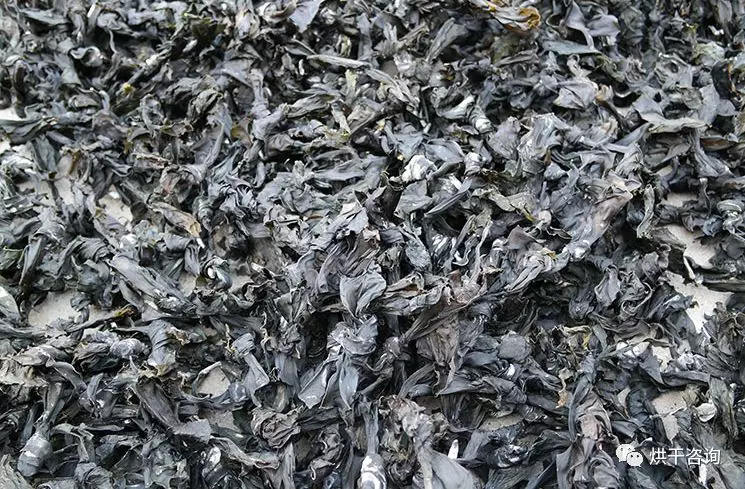
Xiapu, Fujian Province is rich in resources and has a large kelp planting area. However, how to turn natural fresh kelp into dried kelp depends almost entirely on the weather, and the quality of the dried kelp is also very unstable. In recent years, with the successful application of high-temperature heat pumps in drying in many industries, a kelp processing factory in Xiapu contacted us, hoping to use our air-energy high-temperature heat pump to solve the kelp drying problem for them. With the assistance of us and the kelp factory, the kelp drying room designed by the high-temperature heat pump produces kelp that is flat, non-sticky, dries quickly, and has good color. The dried kelp is superior to the kelp dried naturally in terms of quality and color.

Kelp processing steps:
1. Fresh raw materials are put into storage: the raw materials come from the registered breeding base;
2. Boil: put the kelp into the boiling line at 90℃~99℃ high temperature;
3. Salting: salt after boiling and cooling (the amount of salt is 40% of fresh kelp)
4. Storage: cold storage requires 0℃~18℃
5. Cutting: take the raw materials out of the cold storage, remove the surface salt manually and cut them
6. Cleaning and desalting: clean the pre-treated kelp 3 times to ensure that there is no foreign matter and the salt content is controlled below 0.2%.
7. Placing: Place the cleaned kelp shreds on the net plate
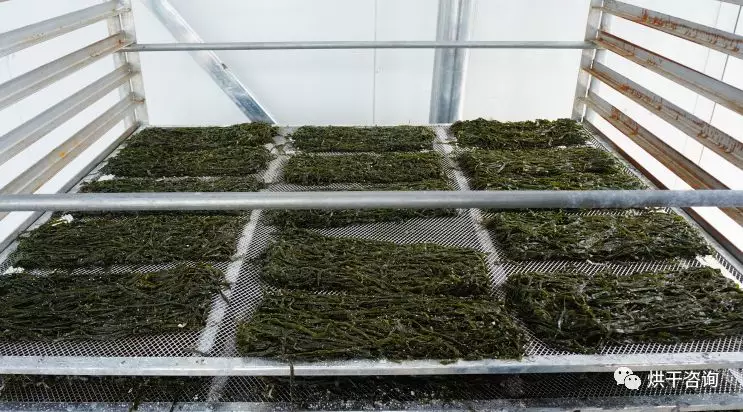
8. Drying:
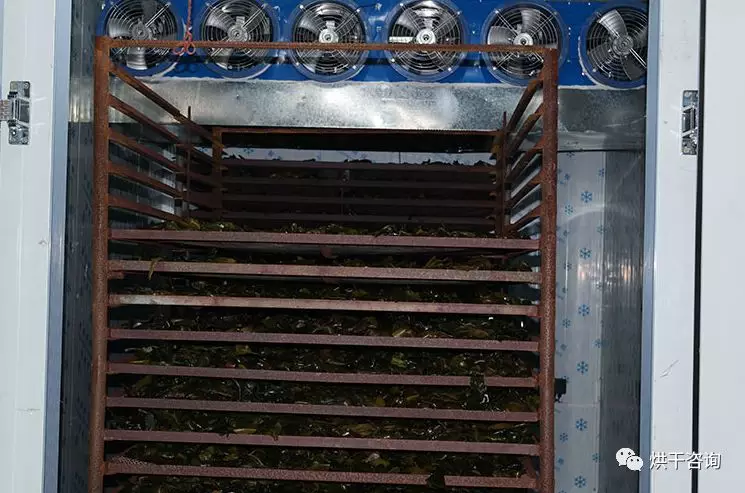
The first stage, the heating stage: Place the trays loaded with materials in the oven flatly without overlapping to avoid unnecessary air leakage caused by improper placement of the trays. Close the door, heat the temperature in the oven to 50°, heat for 1.5-3 hours, and start dehumidification when there is moisture in the oven. It takes about 2 minutes to dehumidify. After dehumidification, the temperature in the oven will drop and continue to supply heat.
The second stage. Constant speed drying and dehumidification stage: It should be divided into two stages: high humidity and low temperature, and medium humidity and medium temperature. In the high humidity and low temperature stage, the temperature is less than 60 degrees, ranging from 55 degrees to 60 degrees. Avoid changes in the color of the material caused by high temperature and high humidity, observe the changes in water vapor on the surface of the material, and dehumidify at any time. This period should be 3 to 3.5 hours. In the medium humidity and medium temperature stage, the temperature is less than 60 degrees, ranging from 50 degrees to 60 degrees. In this stage of dehumidification, the air inlet valve can be opened appropriately, and the return air valve can be closed appropriately, and it can be adjusted reasonably according to the amount of moisture.
The third stage, the speed reduction and finalization stage: also known as the low humidity and high temperature stage, the temperature in this stage is 70 degrees to 80 degrees, and it should not exceed 70 degrees in the early stage and 80 degrees in the later stage.
Previous
Next
Previous
Next

E-mail: 18150135290@163.com
Phone: +86-18150135290
WhatsApp: 8618150135290