


Morel drying
Release time:

Morels are also known as mutton, mutton, and mutton. They are named because of their uneven cap surface, which looks like a mutton. They are a rare edible mushroom variety. Wild mutton is distributed in Shaanxi, Gansu, Qinghai, Tibet, Xinjiang, Sichuan, Shanxi, Jilin, Jiangsu, Yunnan, Hebei, Beijing, Hunan and other regions in my country. Morchella is the most famous delicious edible mushroom among ascomycetes. It is beneficial to the stomach, aids digestion, eliminates phlegm and regulates qi, nourishes the kidney and strengthens yang, nourishes the brain and refreshes the mind, prevents radiation, and enhances human immunity.
Morels are mainly sold to my country's southeastern coastal areas and exported to Europe. Therefore, the cultivation of morels has good economic value. Morchella grows in high temperatures but not low temperatures. Except for arid desert areas and saline-alkali areas and tropical areas (such as Hainan Province, Guangdong Province, Shenzhen and other tropical areas are not suitable for cultivation), other temperate and cold zones and other northern regions can be cultivated. The cultivation effect is better in places where wild morels are produced. Generally, it is "winter planting and spring harvest", sowing in September to December every year, and harvesting in March to April. At present, it can only be cultivated in the field and greenhouse. A large morel can even weigh four taels. The price of fresh morels in the market ranges from 1,500 to more than 300 yuan per kilogram, and the price of dried morels ranges from 2,000 to 4,000 yuan per kilogram. However, morels can only be stored for three days at room temperature. If you want to transport them over long distances or export them abroad, you must dry them and make them into dried morels, otherwise they will rot and cause serious losses. Today, I will share with you the steps of harvesting, processing and drying morels, hoping to help more friends in the morel planting and processing industry.

Morel processing steps:
1. Timely harvesting:
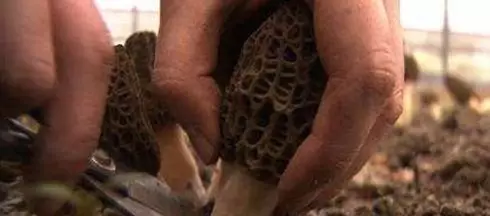
Timely harvesting is one of the key measures for processing high-quality dried morels. Early harvesting has low yield, and late harvesting has low nutritional content and low value. The maturity of the ascocarp of Morchella is marked by the pale yellow color of the stipe and the initial browning of the stipe. Usually, the ascocarp should be harvested when it is 80% mature. At this time, the whole mushroom body is fully differentiated, the color changes from dark gray to light gray or brown-yellow, the cap is full, the grooves on the cap are obvious, the edges are thick, the appearance is beautiful, and the taste is the best. Morchella is usually harvested between 9 and 12 in the morning, and must be picked one by one, and must not be stained with soil. When harvesting, use the three fingers of your left hand to gently hold the stipe, and use a non-metallic object such as a bamboo piece in your right hand to gently pry up the ascocarp. Be careful not to pull it out by hand, because the bottom part remains in the mud, and the soil is full of hyphae, like a net for supplying nutrients. Some good ones can still grow, one after another, and can be harvested until April, but if the hyphae are shoveled off, they will no longer produce mushrooms.
Second, graded storage:
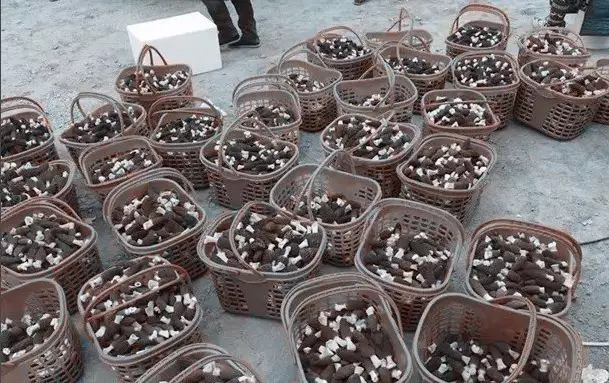
After harvesting, the impurities attached to the morels should be removed, and then stored according to different grades. The baskets and the bottom of the baskets used for picking mushrooms should be covered with soft materials such as toilet paper or straw. Stack the morels in order, and take them lightly to avoid scratching or crushing the surface of the mushrooms. Do not put too many mushrooms in each basket to prevent the mushrooms from being crushed, affecting the appearance of the product and reducing the grade.
Three, cutting handles:
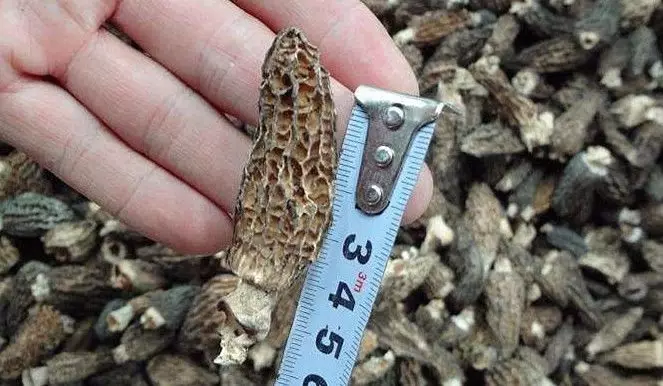
The length of the cutting handle should be determined according to the shape, meat, quality and surface of the morel, and can be divided into three levels: removing bran, cutting half feet and cutting flat feet. This has a great impact on the quality of the finished dried morels and the yield of dried morels, and also affects the sales price of morels.
1) For morels with small surface, thin meat and long feet, it is better to remove the bran (keep the whole foot);
2) For morels with large and round surface, thin meat and soft meat, you can take half of the foot (i.e. cut off half of the foot of the morel), the range is about 1 to 1.5 cm;
3) For morels with large and round surface, thick and hard meat, it is better to take flat feet, i.e. cut off the feet, leaving about 0.5 cm.
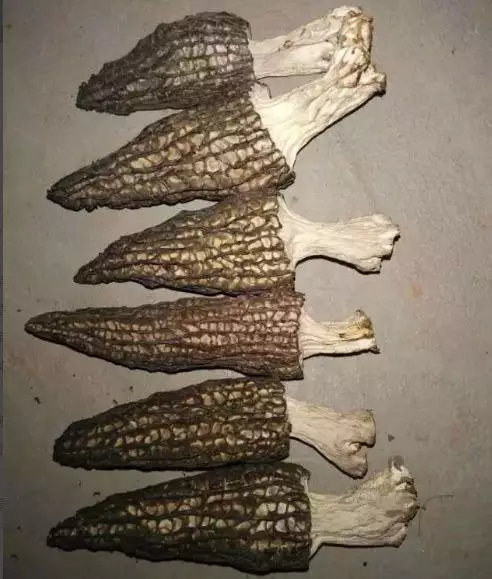
Morels are better if they are large, dark in color and pointed. Morels with pointed caps that can reach more than 5 cm are the best. They are more expensive and rare in the market, and have high nutritional value.
Fourth, preservation and processing of morels:
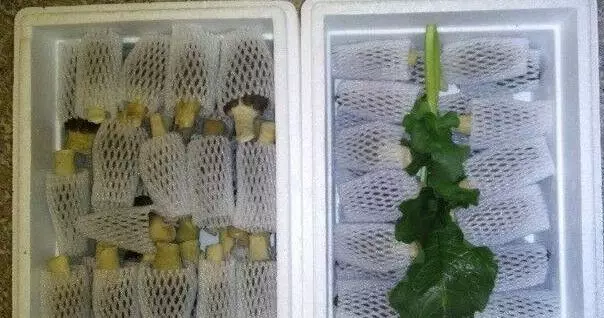
If drying of morels is not required, the morels should be processed for preservation. Use a knife to scrape away impurities at the base of the morels, place them on a mesh screen to drain moisture, and then stack them in foam boxes. Each box contains 100 grams, 150 grams, and 200 grams, covered with transparent plastic wrap, and kept fresh in a 5℃ fresh-keeping cabinet. (This step is not necessary if you want to make dried morels)
V. Drying of Morels:
Morels have a very high moisture content, so special attention should be paid to the control of temperature and humidity during the drying process. Moreover, the moisture content of morels harvested from different batches is different. Generally speaking, the moisture content of the first batch of mushrooms is relatively low, and the moisture content of the second and third batches of mushrooms increases gradually. Based on the experience of drying the first batch of mushrooms, the drying time can be appropriately extended. Here, we take the drying of the first batch of mushrooms as an example to introduce the drying experience of morels:
1) Initial stage of drying:
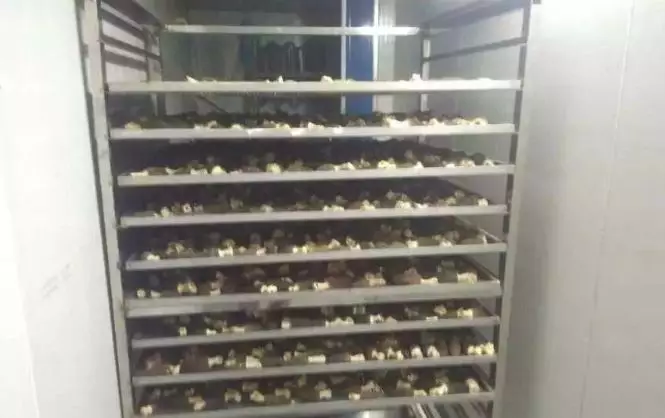
After cutting the stems of morels that do not need to be refrigerated and kept fresh, place them on the drying screen, push the drying screen into the drying oven, close the door and start the machine to start drying. The starting temperature should not be lower than 35℃, preferably 35℃, and the humidity should be controlled within 70%, and the time should be about 3 hours. Use low temperature to determine the quality and color of morels to ensure that their shape is full and not collapsed.
2) Heating and dehumidification
The temperature rises within the range of 40℃~45℃, and the humidity drops to 55%. After about 2 hours of drying, the morels shrink and the moisture content is significantly reduced.

3) Strengthen drying and dehumidification
The temperature rises to about 50℃, the temperature is set at 35%, and the baking is continued for about 2 hours to continue to strengthen the drying and dehumidification of the morels. At this time, the surface of the morel is basically dry, but the mushroom body, especially at the junction of the stem and the cap, is still soft and has not dried out.
4) Final high-temperature drying
The temperature rises to 53--55℃, and then drops to 15%, and high-temperature drying is carried out to achieve thorough drying of the morel.
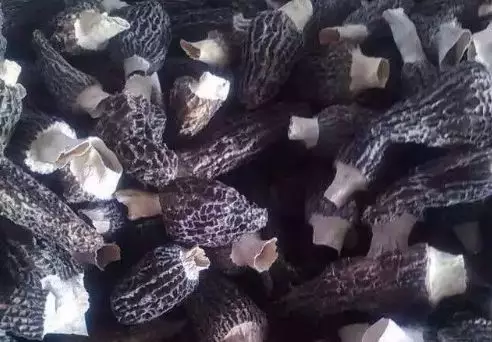
It should be emphasized that in the drying process of morels, the temperature should not be raised too quickly. About 5℃ is more suitable for each stage. The dried morels have a moisture content of about 12%, a full appearance, a beige stem, a brown or black cap, and a fragrant smell. In addition, more than 95% of mushrooms, such as boletus, bamboo fungus, matsutake, ganoderma, hericium, black and white fungus, shimeji, pleurotus eryngii, tea tree mushroom, red mushroom, flower mushroom, enoki mushroom, chicken leg mushroom, nameko mushroom, shiitake mushroom, etc. can be dried using a heat pump morel dryer to achieve energy saving, environmental protection, high efficiency, and intelligent operation to dry high-quality dried mushrooms.
5) Softening
After drying the morels, do not rush to pack them in bags immediately. Leave them in the air for 10-20 minutes to soften their surface. Otherwise, the dry and hard morels will break and be damaged during the bagging process.
Previous
Next
Previous
Next

E-mail: 18150135290@163.com
Phone: +86-18150135290
WhatsApp: 8618150135290