


Persimmon drying in drying process
Release time:

Persimmon is a traditional food in my country with a long history of processing. Persimmon is rich in nutrition, tastes sweet, has the effect of clearing away heat and purging fire and treating many diseases, and is very popular among domestic consumers and sold to Japan, South Korea and other countries. The taste of persimmon depends mainly on the water content, so how to keep the water content of persimmon at a certain level without mold is a problem that needs to be solved in the drying process of persimmon.
Cake processing process
Fruit selection→Peeling→Putting on a plate→First baking→Stop baking→Second baking→Stop baking→Third baking→Stop baking→Vacuum packaging→Storage

Persimmon cake processing points
1. Fruit selection Select high-quality persimmon fruits that are 8-9 mature as raw materials for cake making.
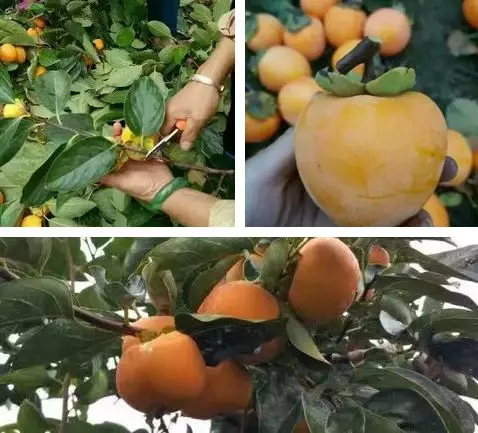
2. Peeling First break off the sepals, cut off the fruit stalks, and then rinse the persimmons with water. Use a stainless steel knife to peel, leaving no top skin or flower skin, leaving only the persimmon skin about 12.5px wide around the persimmon root.
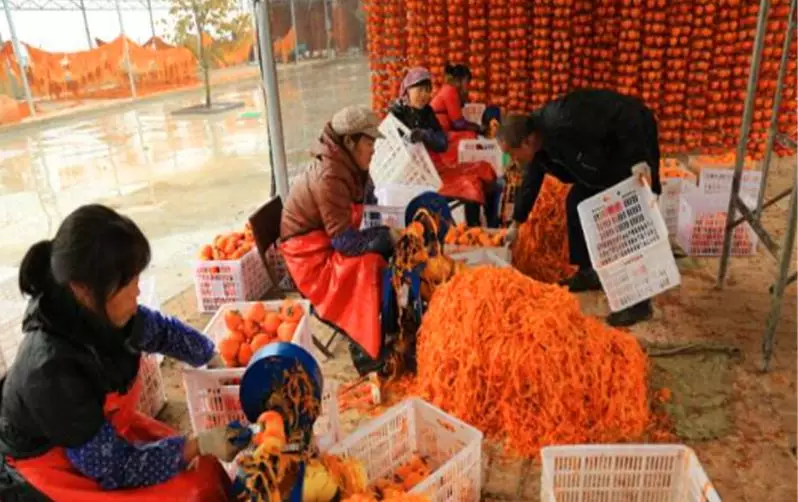
3. Place the peeled persimmons on the baking tray according to their size, leaving a finger-wide gap between the fruits.
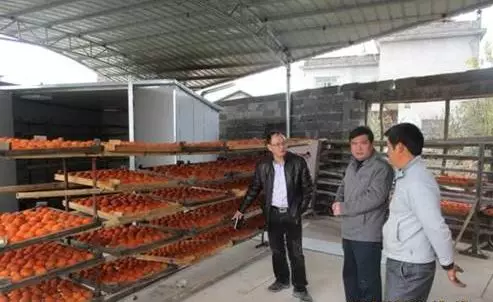
4. First baking After the persimmon fruit enters the baking room, the temperature is quickly raised to 40-50°C, so that the alcohol dehydrogenase activity in the persimmon fruit is at the highest state. The internal respiration is also strengthened, so as to quickly complete the softening, de-astringency and partial dehydration (about 25%), which lasts for about 12 hours, depending on the size and maturity of the persimmon fruit. When drying persimmon cakes, mildew prevention is very important. If you are not careful, the persimmon fruit in the entire baking room will be rotten and lost within a few hours. Therefore, it is necessary to keep the relative humidity in the baking room below 70% to effectively prevent the persimmons from becoming moldy.
5. Stop baking Take out the persimmons, pile them up for several hours to soften them, and then pinch them for the first time. When pinching the cakes, use moderate force to make sure that the flesh is loose without breaking the skin. The specific pinching method is: hold the fruit with both hands and pinch it vertically and horizontally, turning it as you pinch, until the inside becomes soft and the persimmon core is skewed.
6. Second baking Send the pinched persimmons back into the baking room, raise the temperature to 45-50°C, and continue for about 15 hours to quickly dehydrate the persimmons by 35% again.
7. Stop baking Take out the persimmons that were baked for the second time, pile them up again, and pinch them for the second time after they soften. At this point, the persimmon cakes are basically formed.
8. The third baking is maintained at 40-45° for about 10 hours. This is the late stage of baking, and dehydration is relatively slow. The drying process is: the dried persimmons are uniformly hard and elastic, and the water content is about 35%.
9. Stop baking. Take out the dried persimmons baked for the third time, pile them up and cover them until they are soft, and then shape them. Subsequent batches of persimmons are rotated in batches according to the above method and rotated to be processed in turns. This can not only improve the utilization rate of the drying room, but also avoid wasting heat energy.

10. Vacuum packaging Use nylon + polyethylene composite bags with good air barrier to package the persimmons individually, with a vacuum degree of not less than 0.08MPa. After a few days, the cake surface will be covered with white frost, and it is not easy to breed mold.
Drying characteristics of persimmon cake
1. Drying curve of persimmon cake. The evaporation of water during the baking process of persimmon cake can be divided into three stages: the first stage is slow evaporation, in which the evaporation of water is relatively slow, the effect of temperature is very obvious, and the evaporation of water is mainly completed in this stage; the third stage is the gentle evaporation period. When the moisture content of persimmon is lower than 45%, the evaporation rate slows down significantly, and the effect of temperature gradually weakens. According to this characteristic of persimmon water evaporation, the processing of persimmon cake is divided into three stages, namely, the de-astringency and softening stage, the rapid evaporation stage of water, and the drying completion stage.
2. Determination of the processing parameters of persimmon cake. Studies have shown that the optimal processing parameters for persimmon cake processing are the first stage baking temperature of 35-40°C and the drying time of about 24 hours; the second stage baking temperature of 55-60°C and the drying time of 12 hours. At the end of the second stage, the moisture content of persimmons is about 45%; the third stage is baked at a temperature of 40-45°C and a baking time of about 6 hours.
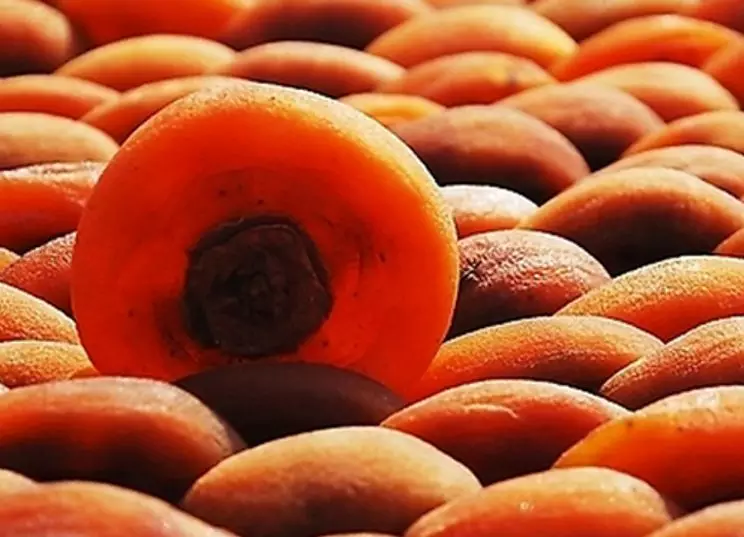
3. Determination of the drying degree of persimmon cakes. Studies have shown that the optimal drying degree of persimmon cakes, that is, the moisture content of persimmon cakes at the end of baking, is 38%-42%. If the drying degree is too low, the moisture content of persimmon cakes is too high, sugar is easily dissolved in the cell fluid, it is difficult to crystallize, and it is difficult to frost. It is also very easy to mold during the frost process. If the drying degree is too high, it is time-consuming and energy-consuming, the finished product yield is low, the frost is small or even no frost, the texture is hard, and the quality is poor.
Previous
Previous

E-mail: 18150135290@163.com
Phone: +86-18150135290
WhatsApp: 8618150135290