


Drying of razor clams
Release time:

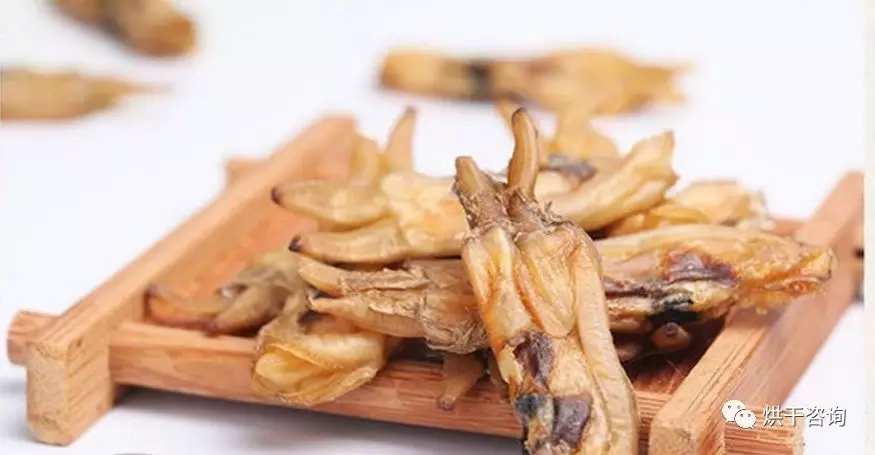
It is abundant in China and is found along the north and south coasts. The meat can be eaten fresh, or processed into dried razor clams and razor clam oil. Razor clams have a long history of cultivation in China, with the largest production in Fujian and Zhejiang, and are farmed in captivity. Dried razor clams can be sold for up to 40 RMB per 50g bag, and drying razor clams can increase the added value for razor clam farmers by a large margin. This post shares a step-by-step example of using a razor clam dryer to make dried razor clams.

Razor clam processing process steps.
Using a heat pump dryer as the heat source. Compared to fresh products, dried products always have a feeling of less juice and more residue. In general, shellfish products such as razor clams made by ordinary drying methods have a coarse and hard texture compared to fresh products, and their sensory quality is poor, which does not reflect the fresh flavour of shellfish well. In this paper, in order to improve the shortcomings of previous dried products, an air energy heat pump dryer is used to bake razor clams, optimising the operating parameters of each process step.
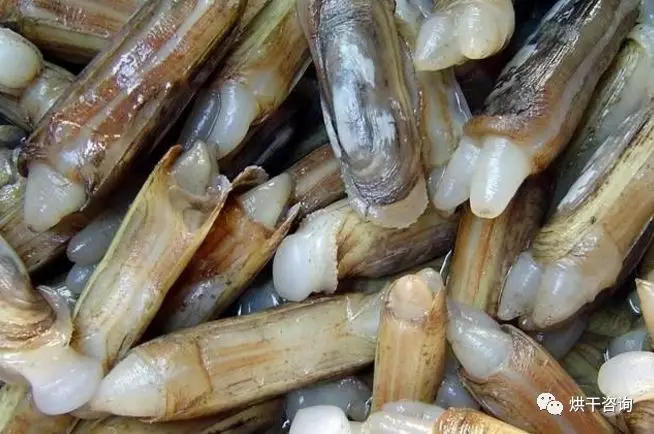
Acceptance of razor clams: use fresh razor clams, pick out broken shells and dead razor clams. The internal systems of the razor clam's soft body structure are required to be vigorous and the meat is elastic and odourless.
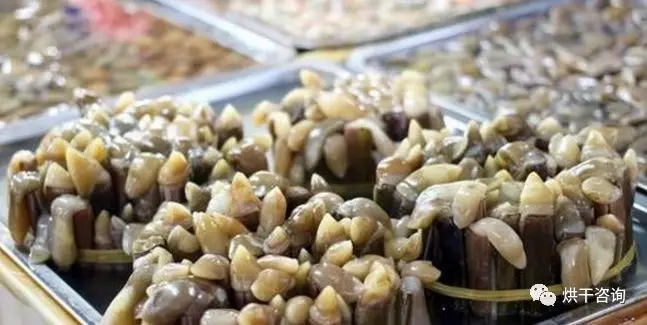
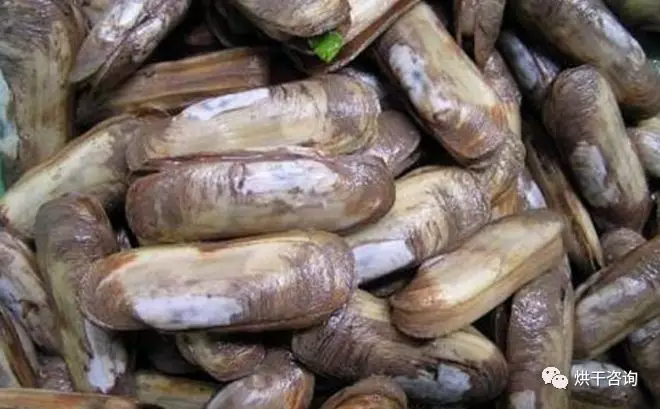
Razor clam washing and sand spitting: Wash fresh razor clams in flowing water to clean the shells of muddy sandy, sandy mud and soft mud, then leave them in 1.0% to 1.5% salt water for 4~6h to fully spit out the sand.
Steaming and cooling: After sand removal, the razor clams are washed and cleaned of surface mucus and sediment, then placed in perforated trays and steamed in an autoclave so that the shells open and the closed shell muscles do not stick to the razor clam shells, then immediately removed from the pot for cooling and rinsing, which should not take too long.
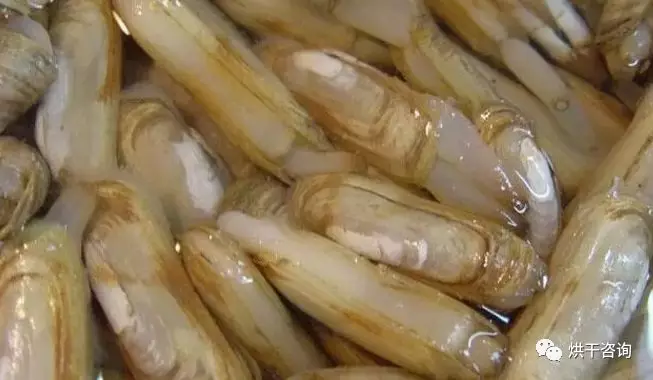
Shelling and grading: After the razor clams have been steamed and cooled, the shells are peeled off, the black tendons are pulled off, the broken shells and broken meat are removed, and the mud, sand, broken shells and other impurities left on the razor clam meat are rinsed with water. The razor clam meat is classified according to length as Grade 1 (over 5cm), Grade 2 (over 4cm) and Grade 3 (over 3cm). Rinse and drain: Rinse to remove impurities such as mud and sand, and drain the water.
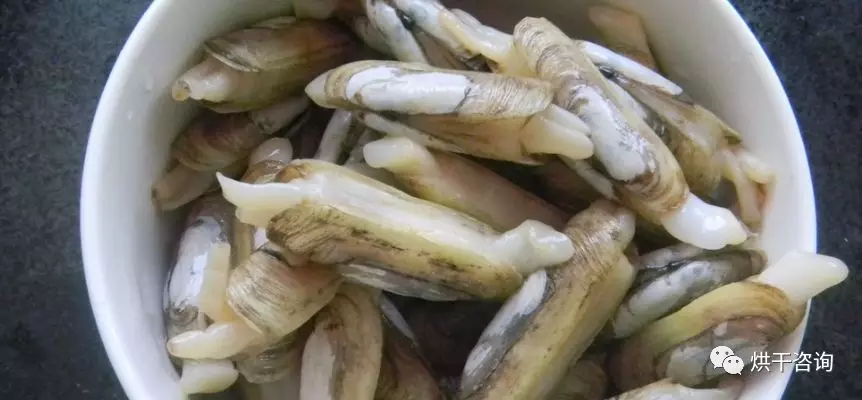
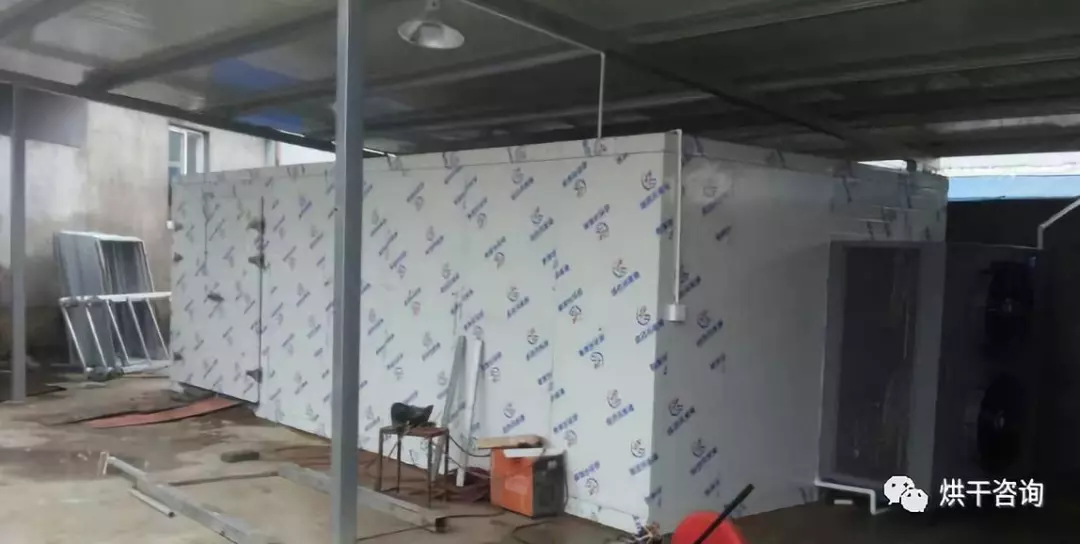
Drying process: drying and roasting: the seasoned razor clams are arranged neatly on a plastic net and placed in a razor clam dryer, set at 50-60°C for a number of hours until their hydration rate is suitable. Once drying is complete, the razor clams are placed in a food bag and sealed and tied tightly. The razor clams are placed in a natural environment or in a freezer to allow the surface to dry out and the interior to still be soft to moisture balance (rewetting). After 18 to 20 hours, the food bag is removed from the bag. The razor clams are left for 30min, thawed appropriately and then placed again in the razor clam drying room for a further period of time to dry to the right degree.
Previous
Next
Previous
Next

E-mail: 18150135290@163.com
Phone: +86-18150135290
WhatsApp: 8618150135290